

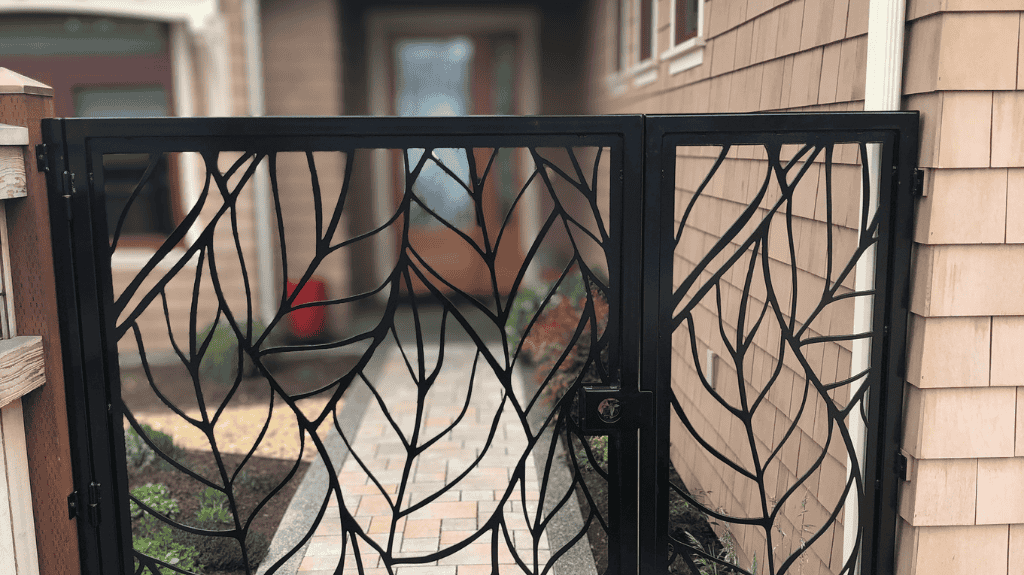
Your fence keeps the yard secure. Your driveway is still wide open. That’s exactly the gap a driveway gate closes.
That gap bothers people more than they usually admit out loud. Maybe it’s a long driveway in Wildwood where anyone can pull all the way up to the house unannounced. Maybe it’s just the unsettled feeling of watching a car slow down out front. You don’t know if it’s turning around or checking out the property. A fence solves the yard. It doesn’t solve the driveway, and the driveway is usually the easiest way in.
You shouldn’t have to choose between a welcoming entrance and a secure one. A well-designed driveway gate gives you both. You get control over who comes onto your property, plus a first impression that looks like it belongs on your home instead of looking like a checkpoint.
What a Driveway Gate Actually Solves
Before getting into styles and automation, it’s worth naming the actual problem a gate fixes. It’s more than “keeping cars out.”
Security, On Your Terms
A gate is a physical decision point. Instead of a driveway anyone can pull into, you control who gets that far. That control comes from a keypad code you share with family, a remote in the car, or a card reader for regular visitors. It also keeps kids and pets from wandering toward the street from the driveway side. A standard yard fence usually doesn’t address that at all.
First Impressions That Match the House
A gate is also one of the first things anyone sees before they even reach your front door. That makes it one of the highest-impact style decisions on the whole property. An ornate wrought-iron gate reads differently than a clean steel-and-wood combination. The right choice should match your home’s architecture, not look bolted on as an afterthought.
Choosing a Gate Style and Material
The right material depends on the look you’re going for. It also depends on how much automation you want layered on top of it.
Wrought iron and ornamental steel gates suit colonial, traditional, and estate-style homes. They’re ornate, substantial, and built to last decades with minimal upkeep. Wood-and-steel-frame gates fit more contemporary properties, pairing the warmth of wood with a steel core for structural stability. Aluminum gates offer a lighter-weight, lower-maintenance alternative to steel with a similar clean look. That’s part of why they’ve become a popular middle ground for St. Louis homeowners who want security without a heavy, industrial appearance.
Whatever material you choose, pick something that complements your existing fence and home exterior. A mismatched gate is one of the more common regrets we hear. It usually happens when homeowners handle it as a separate, disconnected project. Our full lineup of gate styles, from simple walk gates to fully automated estate entrances, pairs with any fence material we install.
Automation Options: Keypad, Remote, and Card Access
This is where a driveway gate goes from a nice-looking barrier to genuinely convenient. Electric gate operators give you three ways in. Open it by remote control from inside the car, by keypad code for family and regular guests, or by card reader for a more managed-access setup. Either way, there’s no getting out in the rain or a Missouri ice storm to swing it open by hand.
Automated gates aren’t just a convenience feature, though. They’re also a safety category with real engineering standards behind them. DASMA, the trade association for gate and door operator manufacturers, explains that gate operators meet the UL 325 safety standard. That standard requires entrapment protection: sensing devices that stop and reverse the gate if it meets an obstruction, rather than continuing to close against it. That standard exists because the risk is real. The Consumer Product Safety Commission has documented dozens of deaths and thousands of injuries tied to automatic gates over the years. That’s exactly why a compliant operator, properly installed, matters as much as the gate itself.
Why Perimeter Security Actually Matters
The Case for a Controlled Entry
It’s easy to assume a gate is more about looks than protection, but the numbers say otherwise. FBI Uniform Crime Reporting data has long shown that residential properties account for the large majority of all burglary offenses nationally. That’s exactly the kind of pattern that makes a controlled point of entry worth the investment, not just for the house itself but for the driveway, garage, and everything parked in between.
A gate also does something a camera or an alarm can’t: it stops the approach before it starts. Cameras document what already happened. A gate changes whether someone gets that close to your home, your car, or your kids’ bikes in the driveway. That’s a meaningfully different kind of security than most homeowners have in place today.
Matching the Gate to Your Driveway
Not every driveway needs the same solution. Part of a good consultation is matching the gate to how the property is actually used. A long, exposed driveway in a neighborhood like Town and Country often calls for a full automated estate gate. That’s simply because of the distance between the street and the house. A shorter driveway in a tighter-lot neighborhood might only need a manual or lightly automated single gate. Pair that with a matching walk gate for foot traffic. Homes with a pool visible from the driveway side sometimes need the gate to satisfy pool code requirements, too. That’s worth flagging for your consultant up front, rather than discovering it during permitting.
What Success Looks Like (and What Doesn’t)
Get the gate right, and you get a driveway that feels like yours again. You decide who pulls in. Your kids and pets have one less way to wander toward the street. The entrance to your home looks as good as the house behind it.
Get it wrong, though, and the picture changes. A gate bought off style alone, installed without a code-compliant operator, or mismatched to your existing fence leaves you exposed. It might not keep anyone out, might not work reliably in bad weather, or might just look like it doesn’t belong. None of those outcomes are worth the investment a gate represents.
Your Gate, Built the Right Way
Here’s how it works with Kirkwood Fence:
- Schedule a free design consultation. Your consultant looks at your driveway, your home’s style, and how you want to use the gate day to day.
- We build a straightforward estimate. Material, automation, and access method are all laid out clearly before any work begins.
- Our installers get to work, the right way. Every gate meets municipal code and safety standards, and carries our two-year craftsmanship warranty.
Kirkwood Fence has been serving St. Louis homeowners in Kirkwood, Chesterfield, Town and Country, and every neighborhood in between since 1979. Every employee carries a full license and insurance, so the crew at your gate is the same quality as the one on your fence.
Schedule your free gate consultation today or call (314) 966-3333. Get a real plan for securing your driveway without losing the curb appeal you worked for.
Not sure yet whether a gate or a full fence upgrade is the better first move? Start with our guide to choosing the right fence for your St. Louis home. It’ll help you see how the two decisions fit together.


